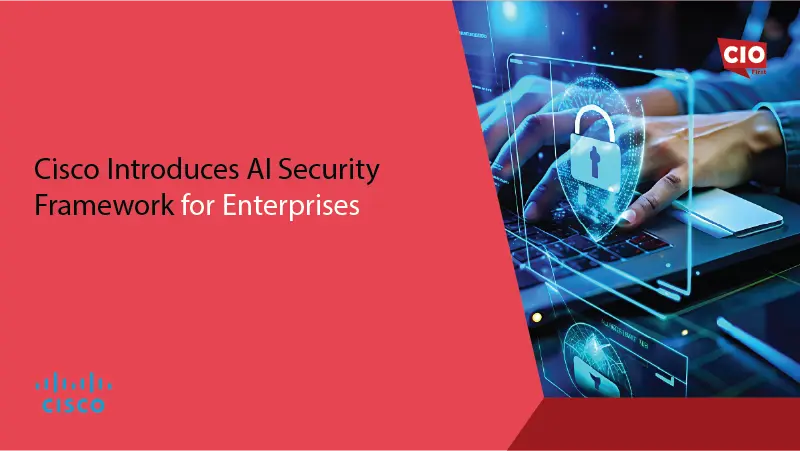
Cisco launched the Integrated AI Security and Safety Framework. This unified approach helps organizations spot, sort, and guard against new risks from modern AI systems. The framework works with any vendor. It helps identify AI threats, spot system failures, and build adaptive defenses.
As more businesses use AI, old security models can’t handle the many risks from dynamic, multimodal, and agent-enabled AI systems. Cisco’s Integrated AI Security and Safety Framework meets this challenge. It offers a clear taxonomy that covers both AI safety and security, including adversarial threats, harmful outputs, model and supply-chain compromises, agent orchestration abuse, and organizational governance.
The framework reflects Cisco’s analysis that existing guidance, while valuable, often addresses fragmented aspects of AI risk without providing an end-to-end view. In contrast, Cisco’s model spans the full lifecycle of AI systems – from data collection and model training to deployment, tooling access, runtime operation, and multi-agent interaction – enabling organizations to implement defence-in-depth strategies grounded in real-world risk scenarios.
Also Read: KnowBe4 Launches Deepfake Training to Protect Organizations from AI-Powered Threats
Cisco defines AI security as the discipline of ensuring AI accountability and protecting systems from unauthorized use, availability attacks, and integrity compromise, and AI safety as ensuring AI systems behave ethically, reliably, transparently, and in alignment with human values. This unified viewpoint supports the development of AI systems that are both robust and responsible.
The framework’s design rests on five core elements: integration of threats and harms, lifecycle awareness, multi-agent orchestration considerations, multimodality risk paths, and an audience-aware model that supports executives, security leaders, engineers and red-team practitioners. These elements help bridge communication between business functions, security teams and technical implementers, fostering shared understanding and coordinated defence strategies.
A key part of the framework is a unified threat taxonomy. It has four layers: attacker objectives, techniques, subtechniques, and procedures. This structure helps organizations move from general risk motivations to specific threat actions. This taxonomy lists risks in safety and security. It helps businesses assess their exposure and prioritize their mitigation efforts.
Cisco says the Integrated AI Security and Safety Framework is part of its Cisco AI Defense offerings. It helps identify threats along with indicators and strategies for mitigation. This supports customers in strengthening defenses against new AI threats.