
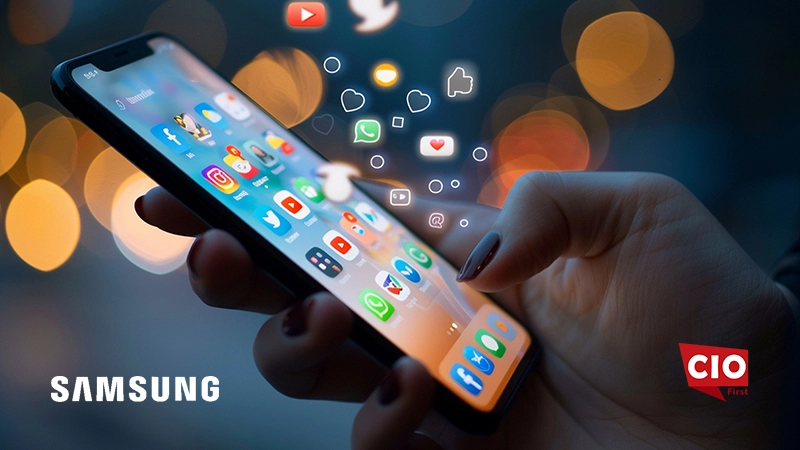
Samsung Electronics has announced a major expansion of its Galaxy AI platform by introducing a multi-agent ecosystem designed to give users more choice, flexibility, and powerful system-level assistance across their mobile devices. At the heart of this strategy is the integration of Perplexity’s AI agent alongside Samsung’s own Bixby and other partners like Google’s Gemini — letting users call on different AI tools for different tasks directly from the operating system.
Reported ahead of Samsung’s Galaxy Unpacked February 2026 event, the announcement underscores the company’s vision to move beyond siloed app-centric AI features toward an AI experience that spans apps and workflows across the entire device — fundamentally reshaping how users interact with apps and how developers build future experiences.
What’s New in the Galaxy AI Multi-Agent Ecosystem
The threefold philosophy that Samsung’s multi-agent AI system is based on is as follows:
System-Level Integration of Multiple AI Agents: Galaxy AI is now an orchestrator at the operating system level, meaning that it is not only integrated within apps but also enables multiple AI agents to work together seamlessly depending on the context of the task.
Perplexity Joins the Fold: Perplexity AI agents can be accessed by users by saying “Hey Plex” or by using quick controls, thus enabling real-time contextual support in basic smartphone interactions.
Deeper Access to Apps: The AI agents are integrated into select Samsung apps such as Notes, Clock, Gallery, Reminder, and Calendar, and will also be compatible with select third-party apps, thus enabling multi-step, cross-app task automation without the need for manual switching.
As Samsung research quoted in the company statement says, “Today, almost 80% of users already use more than two AI agents for different tasks. The multi-agent system is expected to solve this problem by enabling users to select the best AI agent for their task without any hassle.”
How This Affects the Apps Landscape
The expansion of Galaxy AI has immediate implications for apps and the broader mobile software ecosystem — shifting expectations for what apps can do when tightly integrated with generative AI at the system level. (For broader context on applications and industry impact, see Apps and the industry under Apps.)
1. From App-Centric to AI-Orchestrated Experiences
Typically, mobile AI capabilities have been limited to the scope of an individual app – such as one assistant in a messaging app and another in a search service. With the introduction of Galaxy AI at the operating system level, Samsung is making it possible to have context-based AI assistance that can:
Search or summarize information from multiple apps.
Perform tasks related to scheduling, reminders, and organizing content.
Answer natural language queries without having to navigate out of the current app context.
This eliminates the need for users to navigate between different apps to perform complex tasks.
Also Read: Xanadu and Tower Semiconductor Partner to Accelerate Photonic Quantum Innovation
2. More Opportunities for App Developers
Developers now have a more vibrant canvas to create experiences that can harness system-level AI orchestration. Instead of having to develop individual machine learning capabilities in the app, many apps could harness the multi-agent system capabilities of Galaxy AI to provide sophisticated search, summarization, or context-aware help without having to develop their own AI models.
For instance, apps that handle events, projects, or media could harness Galaxy AI workflows to:
Auto-generate summaries or timelines.
Make recommendations for tasks and reminders based on content.
Connect actions between multiple apps (e.g., turn an email into a calendar event).
This opens up new business models where apps become smarter extensions of system AI — leading to richer app-ecosystem monetization and usage growth.
3. Redefining App User Engagement
The workflows that can be orchestrated by AI can lead to increased user engagement as apps become more proactive and predictive. As AI agents are able to recognize context or patterns, such as understanding that a user is planning a trip, they can suggest tasks related to the calendar, notes, travel apps, and reminders without the user having to manually navigate each app.
This could lead to increased retention rates for apps that are integrated with the Galaxy AI ecosystem as users become accustomed to the AI experience rather than the app functionality.
Business Implications Across the Tech Ecosystem
For Samsung and Platform Partners
This is a sign that Samsung is moving forward in terms of evolving from adding features to creating a platform-wide experience that brings together different AI capabilities in a single user experience. By embracing trusted AI partners such as Perplexity, Samsung is creating a flexible Galaxy AI hub that is not closed, unlike other platforms.
This approach could attract more developers and partners to optimize experiences for Galaxy devices, contributing to a richer ecosystem that benefits both Samsung and third-party developers.
For Third-Party App Makers
Third-party apps that are compatible with this new AI ecosystem are ready to take advantage of new integration opportunities, especially those that are productivity or creativity-related. Through integration with or optimization for Galaxy AI agents, apps can offer users AI-enriched experiences that are more intuitive and integrated compared to the traditional in-app AI experience.
Additionally, app developers are also ready to take advantage of new monetization opportunities through the enablement of AI orchestration between apps, such as AI-related premium features or subscriptions that enhance system AI capabilities.
Competitive Landscape and Industry Impact
The multi-agent AI approach puts Samsung at the forefront of the mobile AI space, where personalization, flexibility, and intelligence between apps are emerging as the new differentiators in the market. Unlike previous models where AI capabilities were introduced as isolated features, the new approach by Samsung considers AI as an operating system feature, which may just set a new standard for mobile AI functionality.
By allowing multiple agents that can work together with apps seamlessly, Samsung is also addressing a trend where users are increasingly using multiple AI tools depending on the context, whether for search, task automation, creative assistance, or real-time information.
Conclusion
The move by Samsung to develop the Galaxy AI into a multi-agent system is an indication of the direction that mobile technology is taking in order to satisfy the increasing demands of users for flexible and context-aware intelligence that is integrated into the operating system. For the apps industry, this marks a new era of collaborative AI experiences that work across apps and tasks.
With the development of this ecosystem, especially with the soon-to-be-released Galaxy S26 series and Android upgrades, the synergy of various AI agents may set a new standard for mobile AI experiences and reshape the way consumers interact with applications in their digital world.