The global corporate technology ecosystem has encountered an unexpected operational bottleneck. For the past two years, IT departments aggressively prototyped foundational generative AI models across isolated business divisions. Yet, as companies attempt to push these standalone pilots into high-volume commercial software environments, they run into a distinct execution barrier: the enterprise deployment gap.
While general-purpose large language models (LLMs) are highly effective at answering basic natural language prompts, they face extreme stability constraints when dropped into production pipelines.
Modern global systems-such as legacy banking cores, high-tech distribution channels, and factory logistical grids-run on millions of lines of intertwined software dependencies.
If an organization attempts to deploy an unmanaged AI model to refactor legacy databases, optimize runtime configurations, or coordinate server clusters, the platform struggles with architectural context.
Without highly structured oversight and pre-validated code logic, automated pipelines can easily introduce memory defects, system exceptions, or compliance bugs, stalling a company’s return on investment.
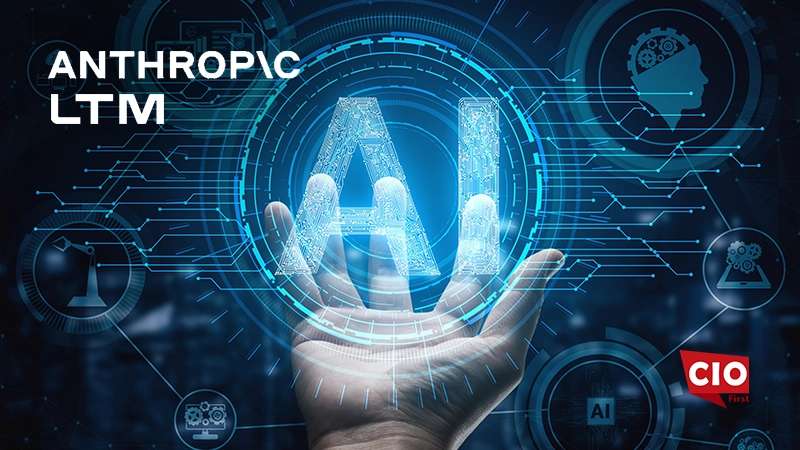
Addressing this structural deployment challenge, global technology consulting and digital solutions provider LTM announced a massive, multi-year strategic partnership with frontier AI developer Anthropic.
By embedding Anthropic’s signature Claude, Claude Code, and Claude Cowork model families natively into its corporate solutions architecture, LTM is delivering a unified digital framework. The initiative is designed to take enterprise AI applications past the testing phase straight into secure, automated software engineering pipelines.
Embedding Agentic Architectures Natively into BlueVerse
The strategic collaboration focuses on moving corporate software management away from manual software engineering loops toward automated, same-week production transformations. Rather than treating generative AI as a cosmetic coding assistant, the initiative establishes a structured reasoning perimeter designed to automate legacy debt refactoring with strict security guardrails.
The unified enterprise service architecture centers on three vital execution pathways:
The LTM BlueVerse™ AI Delivery Fabric: LTM will incorporate Claude and Claude Code into their main digital delivery fabric. This roll-out brings state-of-the-art context-aware models right into SRE, application transformation, observability, and chaos engineering practices.
Claude Center of Excellence (CoE): As the central operational scaling machine for the alliance, the CoE concentrates on creating reusable skills, MVPs, architectures, and implementation playbooks. The center acts as a governance mechanism for monitoring model behaviors, compliance, and data privacy and data residency.
Also Read: Gurobi Launches Intelligence Hub to Bridge the Operations Research Skills Optimization
AI1000 Talent Enablement Program: To protect enterprise clients from the execution pitfalls, LTM will scale up its talent program to train and deploy thousands of certified architects and Forward Deployed Engineers (FDEs). The technology professionals work directly with enterprises’ teams to supervise systematic code changes from the start of design to deployment.
High-Consequence Verticals Target: The partnership roll-out will specifically target four economic verticals with high stakes: BFSI, Hi-Tech ecosystem, consumer consumer platform, and traditional manufacturing networks.
Impact on the Enterprise Software Industry
The structural partnership engineered by LTM and Anthropic signals a major evolutionary milestone for the broader Enterprise Software landscape, reshaping how digital platforms are developed and maintained:
1. Transitioning from Code Generation to Complex Architectural Modernization
Historically, early-generation enterprise AI software acted as basic completion utilities-helping developers type routine code fragments slightly faster.
The integration of Claude Code into global system platforms formalizes the transition to Autonomous System Refactoring. By demonstrating that advanced models can safely analyze millions of lines of interconnected legacy code, map dependencies, and write validated backports, the enterprise software market is moving past simple code completion toward fully automated system modernization.
2. Normalizing the Carrier-Agnostic “Model Ingestion” Architecture
As major corporations seek to future-proof their operations, they are showing intense resistance to rigid cloud environment lock-in or proprietary software perimeters.
LTM‘s BlueVerse model highlights a modular paradigm: Independent AI Delivery Fabrics. Enterprise software platforms are evolving into open integration layers that ingest specialized foundational logic as a pluggable utility, proving that long-term market leadership belongs to companies that can easily bridge model logic with heavy legacy infrastructure.
Overall Effects on Businesses Operating in the Sector
For chief information officers (CIOs), high-tech platform managers, and enterprise procurement directors navigating this automated landscape, the alliance introduces immediate strategic advantages:
Slicing Technical Debt and Development Drag: Manually reviewing and updating decades-old, legacy systems drains immense internal IT engineering capital and slows down release cycles. Utilizing an automated migration fabric enables organizations to modernize core corporate applications in weeks, protecting corporate engineering margins.
Eliminating Logic Errors via Rigorous Model Governance: Deploying unmanaged AI engines to modify sensitive operational systems introduces dangerous hallucination risks. Operating within a certified Center of Excellence framework that subjects every automated patch to rigorous compliance logging protects the business balance sheet from logic defects.
Future-Proofing Workforce Talents Against Tech Disruptions: Forcing engineering teams to manually triage thousands of routine server alerts and configuration bugs diminishes overall operational agility. Deploying pre-trained, automated site reliability tools allows corporations to maximize the value of their existing human engineers, shifting talent to core innovation projects.
Conclusion
“Combining Claude with LTM’s BlueVerse ecosystem, deep domain expertise, technology capabilities, and AI1000 talent initiative creates a powerful foundation for enterprises to embed AI across their business and modernize at scale,” stated Venu Lambu, CEO and Managing Director of LTM. The strategic alliance with Anthropic is a definitive reminder that long-term survival in an automated economy requires looking past standalone model features down to structural delivery execution. By pairing Anthropic’s highly advanced, context-aware reasoning engines with LTM’s massive systems integration footprint and certified talent pools, these two industry leaders are providing the foundational blueprints needed to run a data-dense enterprise safely. For the enterprise software sector, this integration ensures that as businesses scale their automated features, the underlying systems managing core execution remain safe, auditable, and structurally optimized for long-term growth.