
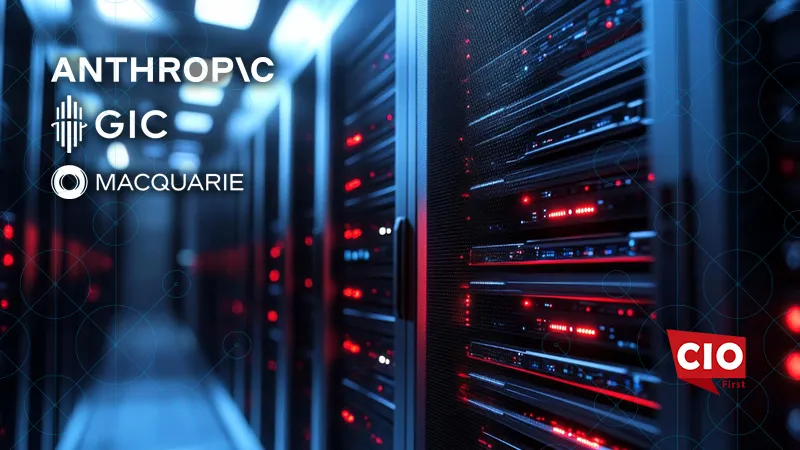
In an unprecedented initiative, indicating a whole new direction for AI infrastructure, Anthropic, an organization known for AI safety and research, has announced an agreement with Macquarie Asset Management and GIC – two global financial giants. This strategic initiative intends to create and utilize tailor-made data center infrastructure for the future generation of AI models.
This multi-billion dollar venture involves three unique giants – Anthropic being one of the leaders in AI models development, Macquarie Asset Management being the leader in investments in infrastructure projects and GIC which is the sovereign wealth fund of Singapore that specializes in real estate and digital assets.
By bringing together the latest AI workload demands with capital and experience in global infrastructure development, this strategic initiative intends to tackle one of the most pressing issues faced by technology industry currently – the absence of sufficient HPC capacity.
The Core Deal: Infrastructure Built for the AI Age
Traditional data center infrastructure was engineered primarily for cloud computing, enterprise software, and standard web hosting. These facilities rely on moderate power densities, typically ranging between 5 to 15 kilowatts (kW) per rack. However, frontier AI architectures-such as Anthropic’s Claude family of models-require vastly higher density, often exceeding 40 to 100+ kW per rack, alongside advanced liquid-cooling ecosystems and unprecedented power grid capacity.
Through this strategic partnership, Macquarie and GIC will provide the capital structure and project management capabilities required to deploy purpose-built facilities from the ground up. Rather than retrofitting legacy sites or competing for standard third-party colocation space, Anthropic secures a dedicated pipeline of hyperscale digital infrastructure designed specifically for massive training runs and low-latency inference workloads.
Transforming the Data Center Landscape
The joint venture between Anthropic, Macquarie, and GIC represents a strategic shift in how the digital infrastructure asset class operates.
1. Transition to Custom-designed AI Infrastructure
The sector is fast transitioning away from general-use data centers and towards specialized AI infrastructures. Designing such specialized AI facilities would involve dense power delivery, chip-to-chip liquid cooling systems, and network fabrics for faster connectivity. Traditional air cooling is ineffective at dealing with the power requirements of modern-day GPUs and proprietary accelerators; this agreement helps to catalyze the transition of the industry towards sustainable liquid cooling infrastructure.
2. Changing Nature of Capital Requirements for Infrastructure Investments
The nature of capital investments needed for building out AI infrastructures is evolving to shift from technology company balance sheets to infrastructure investors. Infrastructure titans such as Macquarie and sovereign wealth powerhouses such as GIC regard data centers as essential utilities for the 21st century. This agreement is setting an example for AI companies on how they can scale their infrastructure needs through off-take agreements backed by patient institutional capital.
Also Read: Sia Acquires Seven Consulting to Drive Local Delivery with Global AI in Australia
3. The Power Grid Challenge and Geographical Expansion
Possibly the biggest challenge with which emerging facilities must contend is that of continuous power supply. Older technological centers such as Northern Virginia, Silicon Valley, and Frankfurt are already suffering from problems with their power grids, along with long-term delays in grid interconnections. It may be expected that this collaboration will push towards greater market diversification, and data center construction in areas that have renewable or nuclear energy available.
Implications for Businesses Across the Ecosystem
The ripple effects of this partnership will extend across every layer of the digital infrastructure supply chain, forcing operators, suppliers, and enterprise clients to adapt to new market realities.
Colocation and Cloud Providers
Traditional data center operators (such as Equinix, Digital Realty, and NTT) must re-evaluate their long-term site design strategies. While standard enterprise cloud migration continues at a steady pace, the premium pricing and explosive volume are driven by AI workloads. Pure-play colocation providers will need to pivot rapidly toward high-density environments or risk being bypassed by bespoke partnerships like Anthropic’s. Furthermore, long-term power purchase agreements (PPAs) and multi-gigawatt site pipelines will become the primary competitive moat for developers.
Supply Chain and Equipment Vendors
Electrical equipment manufacturers, transformer manufacturers, generator makers, and liquid cooling technology companies have much to gain, but their deliveries will be under considerable pressure as well. Supply chains for key components will already be strained. Large amounts of investment from sovereign wealth funds and private equity investors will secure manufacturing capabilities for many years ahead, leaving little left for small business data centers.
Sustainability and Energy Markets
Energy providers and grid managers will be at an important junction. With AI-driven systems requiring constant baseload electricity, more and more data centers are going to invest into building microgrids, on-site electricity generation, and signing power contracts directly with alternative energy suppliers (hydroelectricity, solar energy, wind energy, and future nuclear plants).
Conclusion
The collaboration between Anthropic, Macquarie Asset Management, and GIC underlines a fundamental shift in tech development: AI software capabilities are now inextricably linked to real-world industrial infrastructure.
For businesses operating in the digital infrastructure ecosystem, the message is clear. To stay competitive in an AI-driven economy, hardware design, energy access, and capital structure must be treated as a single unified strategy. As dedicated AI facilities come online, they will not only power the next wave of artificial intelligence breakthroughs, but will also set a new standard for how global digital infrastructure is financed, built, and operated for decades to come.