
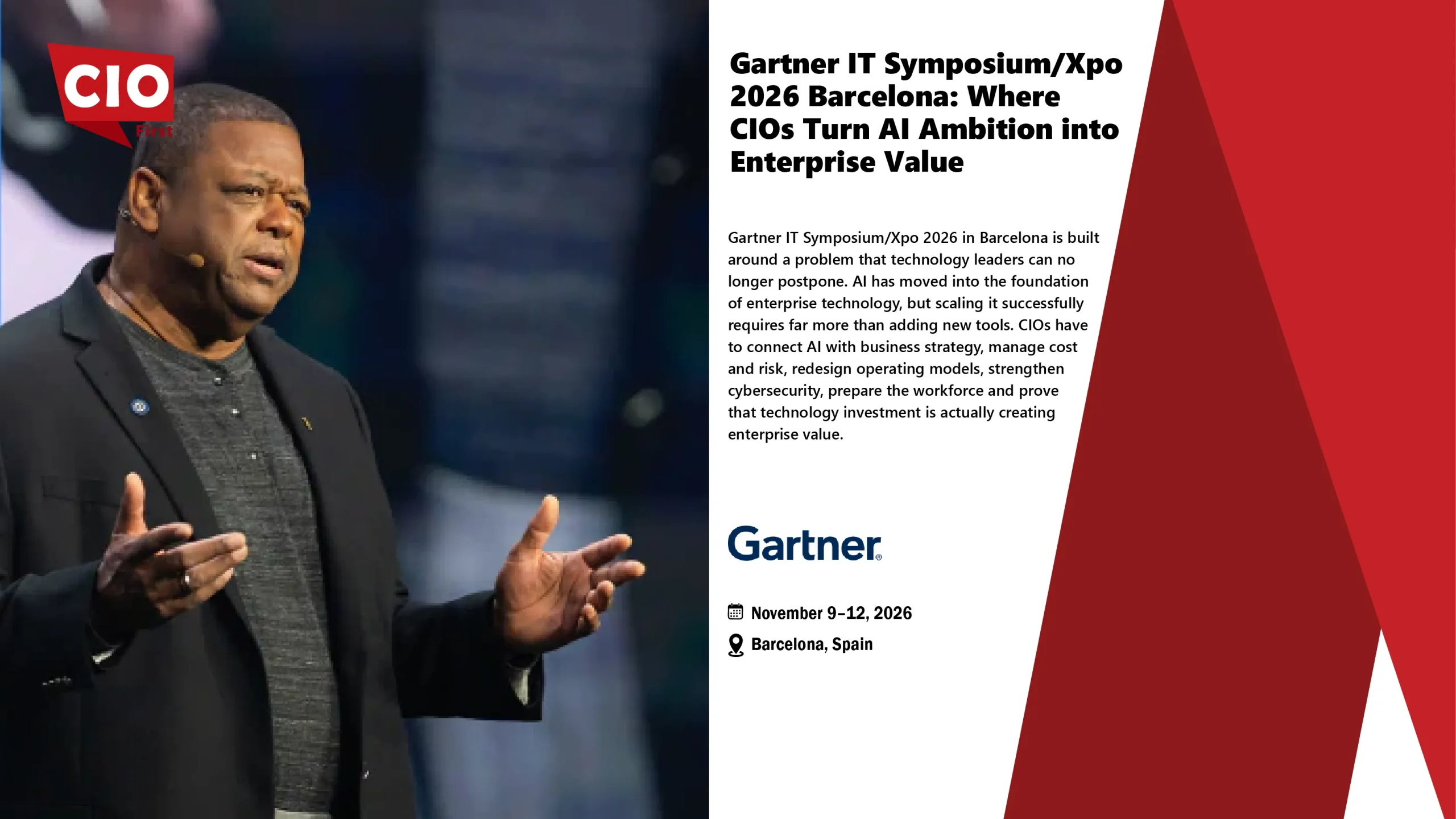
Gartner IT Symposium/Xpo 2026 in Barcelona is built around a problem that technology leaders can no longer postpone. AI has moved into the foundation of enterprise technology, but scaling it successfully requires far more than adding new tools. CIOs have to connect AI with business strategy, manage cost and risk, redesign operating models, strengthen cybersecurity, prepare the workforce and prove that technology investment is actually creating enterprise value.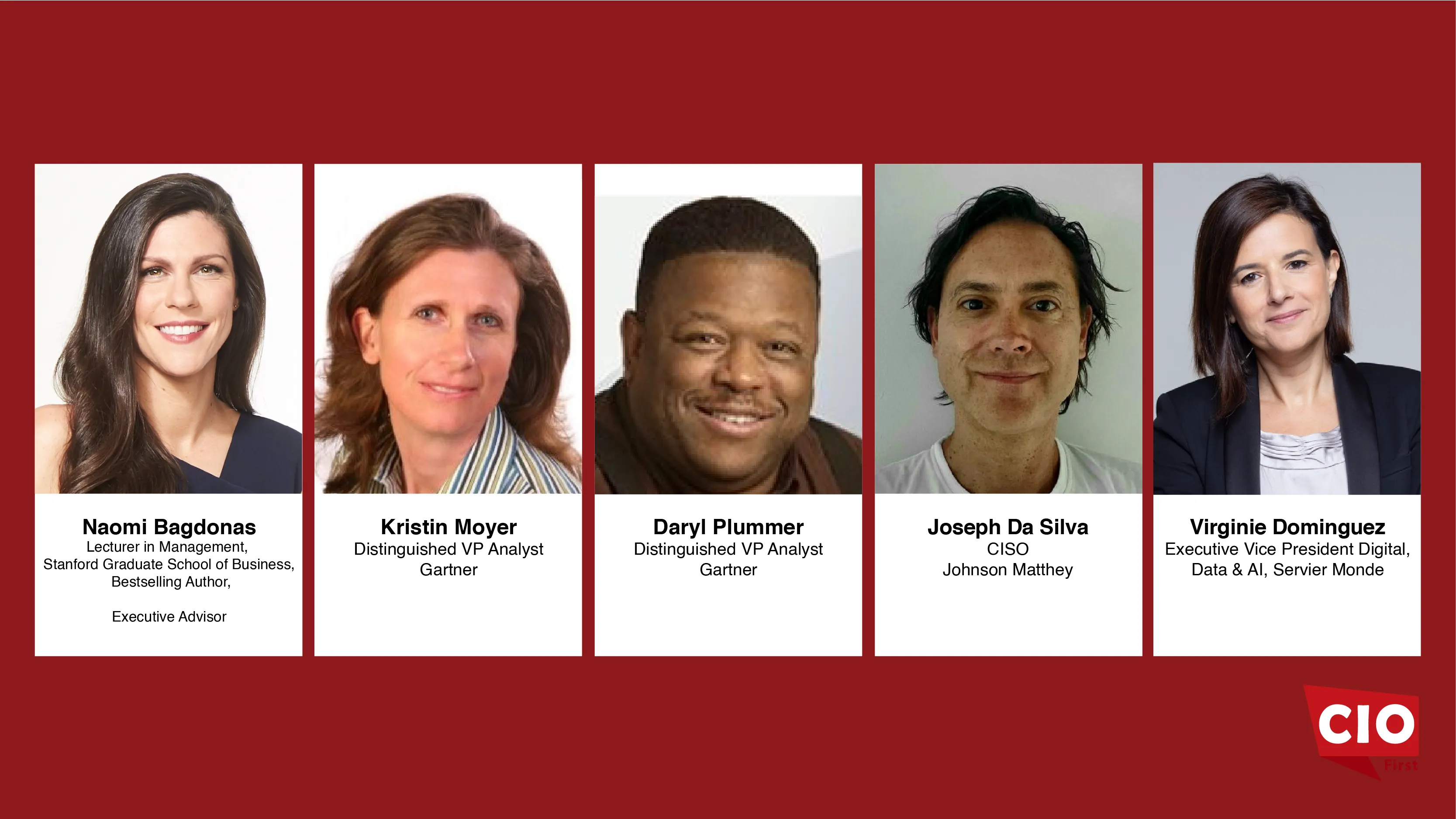
Taking place from November 9 to 12, 2026 at the International Barcelona Convention Center, the event brings together more than 6,500 CIOs and IT executives for four days of research, peer exchange, strategic sessions and technology discovery. Gartner’s 2026 theme is ‘Ignite Intelligence,’ with the program focused on combining human ingenuity with AI to unlock value, increase agility and help organizations navigate disruption.
Where CIO Conversations Get Beyond the AI Hype
The enterprise AI conversation has changed quickly.
A year ago, many technology leaders were still asking where AI could be used. Now they are dealing with a much less comfortable question. How do you scale it without losing control of cost, security, governance or business relevance?
That is where Gartner IT Symposium/Xpo 2026 places its focus.
The conference brings together agentic AI, AI governance, business alignment, technology infrastructure, cybersecurity, data and analytics, operating models, executive leadership and talent. Its agenda contains hundreds of sessions across key technology and business priorities, including dedicated tracks for agentic AI, emerging technology, operationalization, AI strategy, innovation and strategic planning.
That changes the conversation.
The question is not simply what AI can do.
It is what the enterprise should do with it.
What to Expect at Gartner IT Symposium/Xpo 2026?
Hundreds of sessions built around CIO priorities
The 2026 conference agenda includes hundreds of sessions across keynote presentations, workshops, roundtables, Ask the Analyst sessions, Signature Series events and track sessions. Attendees can build a personalized agenda around the issues most relevant to their organizations.
A major focus on agentic AI
Agentic AI sits at the center of the 2026 program. Gartner’s sessions examine autonomous and learning agents, staged autonomy roadmaps, decision intelligence, multiagent systems and the operational controls needed to move from experimentation toward reliable enterprise use.
Direct access to Gartner analysts
The event gives attendees opportunities to interact directly with Gartner analysts through Ask the Analyst sessions, roundtables and one-on-one meetings. Gartner says its 130+ on-site analysts help attendees create and validate their technology game plans around the issues that matter most to them.
IT Xpo technology discovery
The conference also includes IT Xpo, a solution showcase where attendees can explore technology through live demonstrations, meetings with exhibitors and presentations focused on emerging technology directions.
Also Read: Oracle AI World 2026: Where AI Meets Business Outcomes
Programs designed for different leadership needs
Beyond the core conference, Gartner offers specialized experiences including the CIO Circle Program, Women in Technology, a Midsize Enterprise Program and the Global Enterprise Executive Experience. Industry-specific content is also woven into the wider program across sectors such as banking, healthcare, manufacturing, retail and government.
Key Themes Driving the 2026 Program
Agentic AI and the move toward autonomy
AI agents are changing the conversation from automation to delegation.
Gartner’s program looks at how organizations can move toward more autonomous digital work through controlled adoption, staged autonomy and stronger oversight. Sessions such as ‘Decision Intelligence: Getting Value from AI Agents and Multiagent Systems’ focus directly on how organizations can turn these systems into useful business capabilities.
The important word here is value.
Autonomy for its own sake does not improve an enterprise.
It simply creates faster ways to make expensive mistakes.
AI strategy that connects to the business
AI programs struggle when they remain trapped inside technology teams.
Gartner’s 2026 agenda puts strong emphasis on aligning AI strategy with enterprise objectives, building adaptive roadmaps with business leaders and moving away from isolated pilots toward integrated initiatives. The focus is on measurable, organization-wide impact rather than simply expanding the number of AI experiments.
That makes business alignment part of the AI architecture.
Not a final approval step.
AI governance, trust and operationalization
Scaling AI also raises questions around privacy, explainability, compliance, security and accountability.
The program treats governance as something that needs to be built into AI deployment from the beginning. Gartner’s AI operationalization topics include risk-based rollouts, governance, enterprise platforms, domain-specific models, TRiSM controls and cost accountability.
That matters because enterprise AI becomes a very different problem once it moves from a sandbox into real workflows.
At that point, governance cannot remain a side conversation.
AI value and cost management
The economics of AI are becoming impossible for CIOs to ignore.
Gartner’s 2026 topics explicitly focus on outcome-driven metrics, financial discipline, cost transparency, FinOps, production deployments and inference costs. The broader business value of IT theme also asks CIOs to connect technology outcomes with measurable enterprise impact and build stronger value narratives around investment.
Technology leaders are therefore being pushed toward a more uncomfortable standard.
Do not just show what the technology does.
Show what the business gets.
Cybersecurity, resilience and digital sovereignty
The technology strategy now sits inside a much more complicated risk environment.
Gartner’s program covers cybersecurity and enterprise resilience alongside digital sovereignty, cloud dependency, regulation and geopolitical uncertainty. One global enterprise roundtable specifically examines how CIOs can balance control, resilience and innovation as these pressures grow.
That turns resilience into a strategic design question.
The goal is not simply surviving disruption.
It is maintaining room to innovate when disruption arrives.
The human side of the intelligent enterprise
The ‘Ignite Intelligence’ theme does not treat AI as a machine-only transformation.
Gartner describes a human-centered approach as essential to leading the intelligent enterprise, while sessions explore talent, skills, culture and change management. A dedicated CIO Circle workshop, ‘Plan and Build the Human-AI Workforce,’ focuses on workforce planning, skills gaps, agility and resilience as AI changes the nature of IT work.
That is where the CIO agenda starts moving into workforce strategy.
And that overlap is only getting wider.
Featured Speakers and Industry Voices
Gartner IT Symposium/Xpo 2026 in Barcelona brings together Gartner analysts alongside CIOs, digital leaders, technology executives and guest speakers from major organizations. Featured voices include:
- Naomi Bagdonas – Lecturer in Management, Stanford Graduate School of Business; Bestselling Author; Executive Advisor
- Kristin Moyer – Distinguished VP Analyst,
- Daryl Plummer – Distinguished VP Analyst, Gartner
- Joseph Da Silva – CISO, Johnson Matthey
- Virginie Dominguez – Executive Vice President Digital, Data & AI, Servier Monde
The Gartner IT Symposium/Xpo Experience
The event is designed to move CIOs between insight, validation and action.
A keynote can frame the strategic issue. An analyst meeting can challenge a technology decision. A workshop can turn that discussion into a practical plan. A roundtable can reveal how another organization is handling the same problem. Then IT Xpo provides an opportunity to examine the technologies built around those challenges.
That is what makes the format useful.
It does not ask CIOs to absorb everything.
It gives them different ways to test what matters to their own organization.
The specialized programs add another layer, creating more focused environments for CIOs, women in technology, midsize organizations and global enterprise leaders. Gartner also encourages attendees to build their agendas in advance and reserve priority sessions, roundtables and analyst meetings.
The result is less like a conventional conference and more like a strategic working environment.
You come with questions.
The point is to leave with better ones, and preferably better answers.
Why Gartner IT Symposium/Xpo 2026 Matters
The CIO role is expanding at exactly the moment technology is becoming harder to govern.
AI investment has to create value. Agentic systems need controls. Cloud and infrastructure decisions affect resilience and cost. Cybersecurity has become an enterprise issue. Workforce capabilities have to evolve alongside the technology. And boards increasingly expect technology leaders to explain how digital investment affects the wider business.
Gartner IT Symposium/Xpo 2026 brings those pressures into one environment.
Its strongest proposition is not simply the size of the agenda.
It is the ability to connect strategy, technology, risk, economics and people in the same conversation.
The question is no longer whether AI will become part of the enterprise.
It already is.
The harder question is whether CIOs can turn that intelligence into something the business can trust, afford and actually use.
That is the challenge Gartner IT Symposium/Xpo 2026 in Barcelona is built to tackle.
👉 Discover more at www.gartner.com/en/conferences/emea/symposium-spain