It’s the end of the honeymoon phase of enterprise AI Organizations in all the leading industries have invested billions in generative models, pilots, and proofs of concept and been met with a harsh operational truth: adopting AI at scale is complicated, it’s expensive without highly disciplined governance, and proving ROI to the CFO is still a far-off dream.
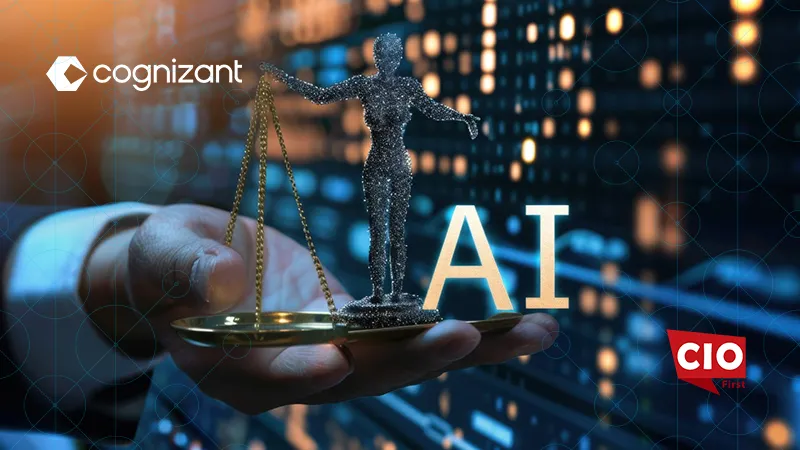
To help close this all-important ‘value velocity gap,’ and accelerate the delivery of value at speed, Cognizant, a world leader in business technology and IT services, revealed Cognizant AI Nexus-a flexible multi-model operating layer that enables enterprises to govern the costs, quality and outcomes of their AI initiatives.
Governing AI Spend and Quality at Scale
Cognizant’s announcement comes as the leaders of the technology industry are under increased scrutiny to provide clear evidence of improved productivity from investing in AI. The launch references a study to highlight the severity of the problem:
- Potential annual value of $4.7 trillion remains unrealized across the Global 2000 due to execution obstacles.
- Two-thirds of business leaders have failed to realize measurable productivity gains from using AI, causing one in four to halt or give up on their AI projects.
- Financial unpredictability is at an all-time high-72% of businesses went over budget on their AI last year, and 97% had unintended expenses due to AI agent sessions spinning out of control.
Also Read: The Dawn of Hardware-Integrated AI Governance: How SentinelOne and Lenovo Are Reshaping Cyber Security
Cognizant AI Nexus. As a governance and operations platform native to the enterprise’s private environment, AI Nexus is composed of five distinct modular tools:
1. One shared, secure workspace to build, code, and run analysis against your own persistent AI specialists with enterprise-specific memory.
2. Orchestrate: A product to reconstruct sophisticated enterprise business procedures into handled agentic procedures, assigned to certified engineering and operations functionary staff.
3. The analytics engine that visualizes and connects each token, tool, and dollar spent back to a project team and end results; Bringing oversight to the funding process.
4. Coach: An auto-evaluation system that automatically analyzes the AI outputs in real time and offers recommendations to optimize the company’s performance.
5. Route: An advanced dynamic engine that determines whether an AI query should be routed to open-weight, open frontier, or self-hosted model, according to needs for quality, control, and unit cost.
Through consumption metering, guardrailing, and enterprise context, we leverage disconnected AI experiments into repeatable, scaling assets.
Ripple Effect on IT & Enterprise Services Sector
For most of the industry, the launch of Cognizant AI Nexus is a historic event that will change the landscape of the IT services, technology consulting and enterprise software domains. It indicates three wider changes for any enterprise in this domain.
1. The Death of the “Model-First” Selling Approach
For three years, IT service providers and cloud vendors have been competing largely on the ability to demonstrate the most raw model capabilities-with boasts about number of parameters and length of context window. At the edge of today is a race to interface more efficiently.
Cognizant’s platform spotlights a feature of the disruption: the underlying architecture of the industry is being commoditized. In the near term, the source of differentiation for IT-services companies will not be the model they select but how well they can engineer the layer of context-the domain enterprise data, rules of work, and security standards in place to enable models to do their work safely.
2. Fin Ops for AI” Emerges as a Standard Service Offering
Budget noise is now leading to the most considerable ground for friction between executives when it comes to adoption of AI. Unrestricted API usage, unoptimized routing, and targetless looping autonomous agents have been giving CFOs of a pain in the head.
Hence, system integrators, managed service providers (MSPs), and IT consultancies can no longer just provide AI capability; they must provide financial governance by definition. Products such as AI Nexus, which applies automatic, real-time, cost-performance routing policies, will compel every tier 1 consulting firm to include AI Fin Ops in their primary cloud transformation and IT management service lines.
3. Moving from Task Automation to Managed Agentic Workflows
The early examples of enterprise AI were largely productivity tools for people-codes co-pilots and stuff that summarizes email. But true enterprise-scale productivity will require reengineering every cross-functional process around autonomous software agents.
This shift is also reshaping human capital demands within the industry. The shift in software engineering labour requirements is toward a hybrid operational model (e.g., Cognizant‘s specialized “Frontier Certified Engineers” and “Frontier Business Operators”). IT services organizations that do not deliver managed, end-to-end agentic workstream management will not be able to participate if clients move to outcome-based accountability rather than billable-hours.
What This Means for Enterprise Operations
The key message for businesses roaming this terrain is: enterprise AI is no longer about experimenting, but executing and governing. Firms that deploy multi-model routing, detailed cost tracking and context-aware guardrails at the beginning will be poised to close the execution gap–converting high-risk tech spend into long-term, scalable competitive advantages.