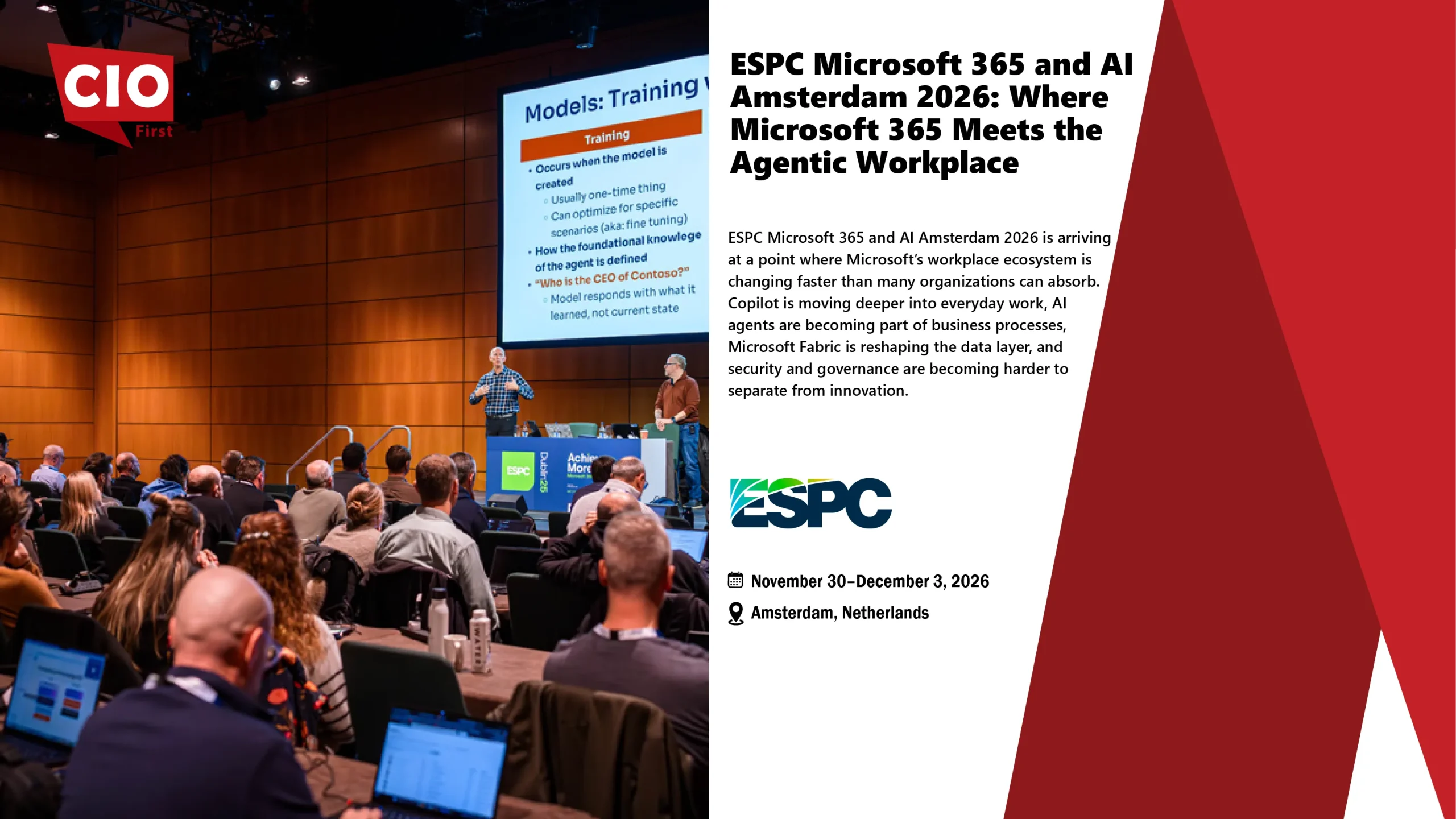
ESPC Microsoft 365 and AI Amsterdam 2026 is arriving at a point where Microsoft’s workplace ecosystem is changing faster than many organizations can absorb. Copilot is moving deeper into everyday work, AI agents are becoming part of business processes, Microsoft Fabric is reshaping the data layer, and security and governance are becoming harder to separate from innovation.
Taking place from November 30 to December 3, 2026 at RAI Amsterdam in the Netherlands, ESPC brings together more than 2,000 attendees across IT, development, architecture, business and Microsoft partner communities. The four-day conference combines full-day tutorials, more than 100 specialist sessions, keynotes, interactive discussions, an exhibition and a broader networking programme built around Microsoft 365, Copilot, Teams, SharePoint, Power Platform, Fabric, Entra, Azure and AI.
Where Microsoft 365 Conversations Get Beyond Copilot
Copilot has become the obvious headline in Microsoft’s workplace story.
But the harder questions begin after adoption.
What should an organization actually build with agents? How should those agents be governed? What happens to enterprise content when AI can search, reason over and act on it? How do security, identity and compliance keep up? And where does human judgement still matter when more work can be delegated to software?
ESPC 2026 puts those questions together.
The programme spans nine content tracks, including Copilot and Agents, AI Strategy, Ethics and Governance, Data and AI Analytics, Security and Compliance, Developer and AI Innovation, Azure Platform, Automation and Business Solutions, and Modern Work and Collaboration.
That breadth is significant.
The AI workplace is not being built inside one product.
It is being built across the entire Microsoft ecosystem.
What to Expect at ESPC Microsoft 365 and AI Amsterdam 2026?
A full day of hands-on tutorials
November 30 is dedicated to full-day tutorials covering areas such as custom Microsoft 365 agents, agent security and governance, Copilot Studio, AI-ready information architecture, Power Platform solutions and advanced agent development. The tutorials are designed at different technical levels, giving attendees room to choose between introductory and deeper practitioner learning.
Four major keynote sessions
The main conference opens with Jeff Teper and Adam Harmetz from Microsoft presenting ‘The AI-Powered Enterprise.’ The programme then moves into fireside discussion around AI, productivity and business transformation, a provocative session on staying relevant when AI can perform more consulting work, and a final keynote focused on combining AI with empathy in the next era of work.
More than 100 specialist sessions
The conference offers 100+ expert-led sessions across its content tracks, with topics ranging from agent architecture and Microsoft 365 Copilot extensibility to AI-ready analytics, Zero Trust, data governance, Azure and automation. Sessions are also categorized by audience and technical level so attendees can build a more relevant learning path.
Interactive learning and exhibition access
The ticket experience includes interactive session Q&As, panel discussions, full access to the exhibition area, a personalized schedule builder, social events and networking. The expo also acts as a practical bridge between technical learning and the wider Microsoft partner ecosystem.
Also Read: Microsoft Ignite 2026: Where AI Moves from Demonstration to Enterprise Reality
Key Themes Driving the 2026 Program
AI agents become part of the enterprise
The strongest thread across the 2026 programme is the move from AI assistance toward AI action.
Sessions explore custom agents, Copilot Studio, Microsoft Foundry, agent governance, Agent 365, MCP, RAG and agent-to-agent interactions. One tutorial specifically asks organizations to choose between Copilot Studio and Microsoft Foundry when designing intelligent agents, while another focuses on building and governing advanced Copilot Studio agents.
This changes the workplace conversation.
An assistant helps an employee.
An agent can start changing the workflow itself.
That is where architecture and governance suddenly matter a lot more.
The AI-powered enterprise needs cleaner foundations
ESPC’s programme repeatedly connects AI with information architecture, data quality, content management and enterprise knowledge.
The conference includes sessions on AI-ready intranets, building an AI-ready analytics platform with Microsoft Fabric, data hygiene for AI and transforming knowledge management with Microsoft 365 and Copilot.
That is an important reality check.
AI does not magically fix messy information.
In many cases, it makes the mess easier to discover.
Governance becomes an engineering problem
The 2026 agenda treats security, compliance and governance as core parts of the AI discussion.
Sessions cover agent security, Zero Trust, Entra Agent ID, Microsoft Purview, Agent 365 and end-to-end governance across Microsoft’s agent ecosystem. One session specifically examines how Defender, Entra, Purview and Agent 365 can work together to govern agents in the real world.
That signals a shift from ‘Can we build it?’ to ‘Can we safely operate it?’
For enterprise AI, the second question may be the one that determines whether the first one matters.
Copilot adoption moves into the business strategy conversation
The programme also looks at AI adoption from the organizational side.
A session on accelerating Copilot adoption uses the ADKAR model and Microsoft’s Service Adoption Specialist Frameworks, while other sessions examine how Copilot and agents can create business value and how organizations can move from proof of concept toward wider deployment.
The lesson is fairly straightforward.
Buying licenses is a technology decision.
Getting people to change how they work is a leadership decision.
AI changes the role of the developer and consultant
Several sessions deliberately challenge how technical professionals work in an AI-heavy environment.
‘The Last Consultant Standing’ asks how consultants stay relevant when AI can perform parts of their jobs. Other sessions explore vibe coding, team coding, AI-generated applications, production-grade agentic knowledge bases and AI-powered development experiences.
That makes the event relevant beyond Microsoft product specialists.
It is also about what happens to professional work when software starts taking on more of the work itself.
Featured Speakers and Industry Voices
ESPC Microsoft 365 and AI Amsterdam 2026 brings together Microsoft executives, Microsoft MVPs, consultants, developers, architects and community leaders. Featured speakers include: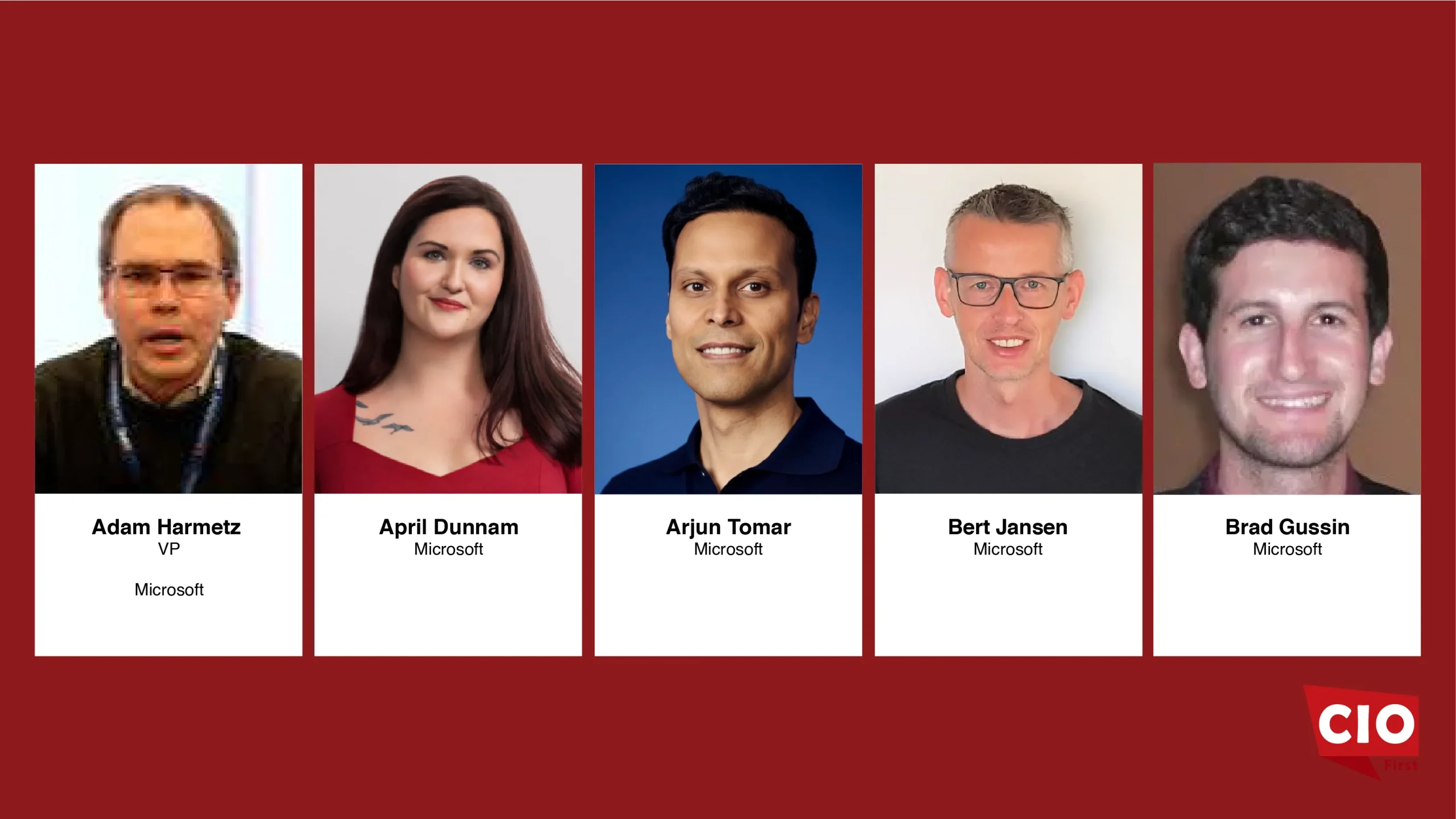
- Adam Harmetz – VP, Microsoft
- April Dunnam – Microsoft
- Arjun Tomar – Microsoft
- Bert Jansen – Microsoft
- Brad Gussin – Microsoft
Check out the full speaker list here: https://espc.tech/conference/espc-2026/speakers/
The ESPC Microsoft 365 and AI Experience
ESPC is deliberately positioned as more than a technical conference.
Its organizers emphasize direct access to Microsoft experts, practical learning and a community-driven environment where attendees can exchange ideas with peers and partners. The programme mixes specialist sessions with hands-on tutorials, networking, exhibition activity and social events.
The structure also makes room for different kinds of attendees.
A business decision-maker can focus on AI strategy, adoption and business value. An IT professional can go deeper into security, governance and administration. Developers can spend time on agents, Copilot extensibility, Azure and AI innovation.
That flexibility matters.
Because the Microsoft ecosystem is no longer a neat collection of individual products.
It is becoming an interconnected workplace platform, and the decisions made in one layer increasingly affect the others.
Why ESPC Microsoft 365 and AI Amsterdam 2026 Matters
The Microsoft workplace stack is entering another phase.
AI agents are moving into business processes. Copilot is becoming more embedded in everyday work. Data is becoming the foundation for enterprise intelligence. Security and governance have to follow AI into places they have not traditionally occupied.
ESPC 2026 brings those changes into one room.
Its real value is not simply the number of sessions or Microsoft technologies represented. It is the connection between them. Attendees can move from an AI strategy discussion to an agent workshop, from a governance session to a conversation with a Microsoft expert, and from a product demonstration to a discussion with someone dealing with the same implementation problem.
The question is no longer whether Microsoft 365 will become more intelligent.
It already is.
The harder question is whether organizations can make that intelligence useful, governed and genuinely embedded into how work gets done.
That is the challenge ESPC Microsoft 365 and AI Amsterdam 2026 is bringing to Amsterdam.
Discover more at https://espc.tech/conference/espc-2026/