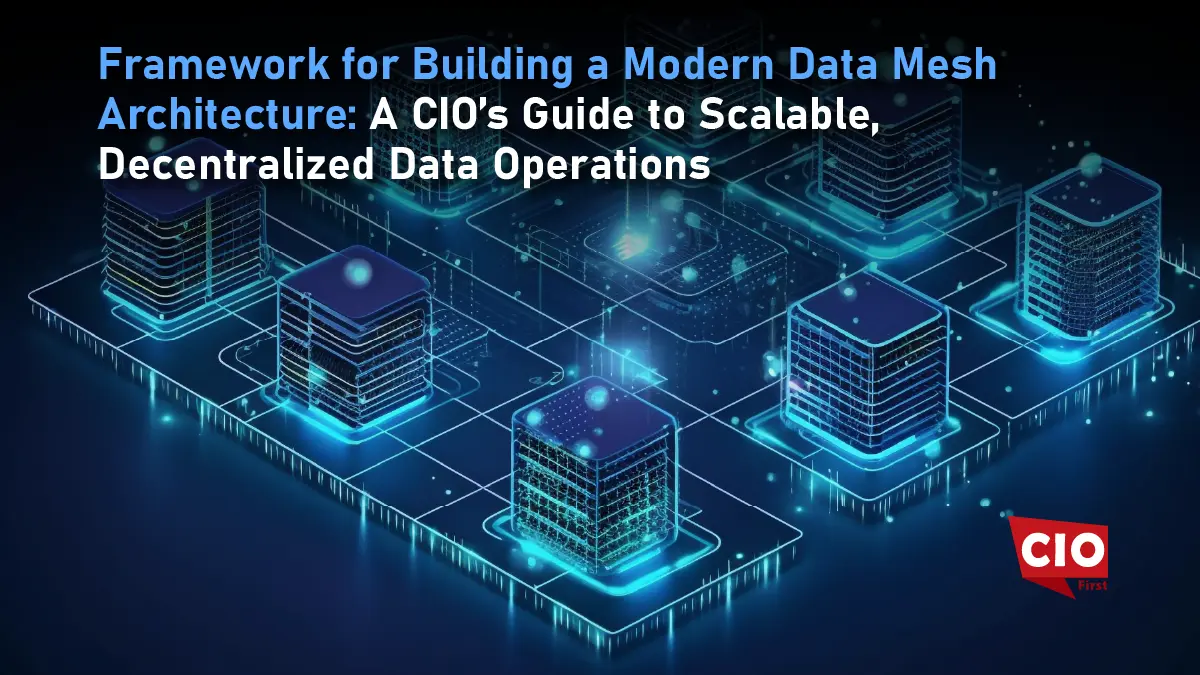
Centralized data lakes were supposed to make life easier. They were supposed to give everyone access to data. But in reality, they often slow things down. IT teams get buried under requests. All reports, all dashboards, and all questions must go through a central team. It creates a bottleneck. Work piles up. Decisions are delayed.
Data mesh is different. It is not just a technology. It is a change in how the organization works. It is about treating data like a product. Domains own their data. They maintain it. They make it usable for others. The central team becomes an enabler, not a gatekeeper.
The promise is clear. Faster time-to-insight. Domain autonomy. Scalability. Organizations can move quickly. They can experiment without waiting for IT. A clear framework for building a modern data mesh architecture gives CIOs a guide for making this shift practical. By the year 2025, Microsoft Azure (54%) and Amazon Web Services (50%) are the ones where the majority of analytics workloads are being hosted. SAP Analytics Cloud (44%) is the only specialized vendor which has made it to the list of the top five players. This indicates that the cloud platforms are facilitating the transition and the enterprises are abandoning the monolithic applications.
The Four Pillars of a Successful Data Mesh Framework

The first step to making data work is letting the people who know it best take control. Instead of IT being the middleman for everything, business units like Sales, Marketing, and Logistics own their data. They know it, they understand it, and they can decide how it should be used. This shift stops IT from being a bottleneck. It also makes teams more responsible for the quality of their data. When the people closest to the data are in charge, things move faster and mistakes drop. It gives clarity and accountability to everyone.
Data should be treated like a product. It is not just rows and columns sitting in a warehouse. Each data product has to be easy to find. It has to be safe to use. It has to make sense to anyone who needs it. Teams should think like product owners. They need to make sure the data works for others, that it is correct, and that it is documented in a way people can understand. This mindset keeps data reliable and useful. It also helps analytics, AI, and business teams get what they need quickly.
The IT or central platform team has a new job. They need to build infrastructure that lets each domain create and manage its own data products. Google Cloud has a blueprint for this. It shows how to handle hybrid and multicloud setups. It explains governance using CDMC frameworks. It covers metadata, access controls, ingestion, and managing data across its lifecycle. Following this blueprint lets organizations give domains independence without losing control. Teams can work faster while standards are still enforced.
Finally, governance cannot be ignored. Policies as code, automated checks, and rules make sure every domain follows security and interoperability standards. A 2025 survey shows IBM’s watsonx.data, Oracle database and ERP services, and SAP Business Data Cloud are top enterprise platforms. They unify structured and unstructured data. They improve governance and analytics. Using these platforms across domains helps scale data mesh without losing oversight.
Together, these four pillars build a system that works. Domains move fast. Data is trustworthy. Enterprises get the insights they need. This is what a modern data mesh architecture really looks like.
Strategic Implementation Phased Framework for CIOs
Starting with data mesh can feel like a huge mountain to climb. There are a lot of moving parts. Everyone wants results fast. The trick is to start small. Phase one is pilot and assess. You do not try to do everything at once. Pick one or two domains that are willing to cooperate. Marketing is usually a good choice. Sales can work too. The idea is to create a small, manageable data product. Something you can deliver, measure, and learn from. That is your ‘thin slice.’ It gives people confidence. It also shows that you are serious about letting domains own their data.
Virgin Media O2 shows how it works in the real world. They used Google Cloud’s data contracts. These contracts enforce schema. They enforce semantics. They also enforce data-quality SLOs. Every data product follows clear rules. It makes it easier to catch mistakes before they become big problems. It shows business teams that the system works. It builds trust between IT and domains. It proves that domains can own data and still keep it reliable.
Phase two is about building the platform backbone. IT has to stop being a ticket taker for every request. The central team builds infrastructure that lets domains create their own data products. Automation is key. Every small obstacle you remove makes it faster for teams to work. The platform should include hybrid cloud setup, access controls, metadata management, governance. Google Cloud’s blueprint can guide this. Domains should feel supported. They should feel empowered to move fast without breaking rules.
Phase three is scaling and federating. More domains join in. IT’s role changes again. Now they coach and enable. They make sure policies are followed. They make sure governance is maintained. But the actual creation and management of data products is in the hands of the domains. This keeps everything scalable. It avoids bottlenecks. New domains can start contributing without slowing everyone else down.
Do this right and the organization starts moving faster. Domains take ownership. Data stays trustworthy. Insights are delivered quicker. This is how a modern data mesh architecture actually works. Start small, build the platform, scale carefully. It is a journey. Each phase reinforces autonomy, quality, and speed.
Also Read: AI CRM Tools: How Intelligent Customer Platforms Are Redefining Sales and Service in 2026
Overcoming the Cultural Hurdles
Making data mesh work is hard. Really hard. It is not just about tech. It is about people. About teams. About habits. CIOs need to face this head-on. You cannot just buy a tool and expect everything to fall into place. Culture matters. Mindsets matter. High E-E-A-T comes from admitting that.
The first thing is ownership. Domains are used to asking IT for data. They are used to waiting. Then suddenly you tell them. You tell them they own their data. The quality. The structure. Everything. At first they push back. They worry. They ask if they are ready. They are scared of blame. But this is essential. Without ownership nothing changes. Without it, IT still becomes the bottleneck. Teams need examples. Support. Proof that ownership works. They need to see it in action.
Then comes the skill gap. Analysts and business teams are good at reports. They are good at insights. But data as a product? That is new. They need training. They need to learn about quality. About reliability. About documentation. They need to understand how to make data usable for others. Without this, autonomy fails.
Finally, IT has to change too. They cannot be gatekeepers. They have to help. Build platforms. Guide domains. Coach teams. Google Cloud being a Leader in the 2025 Gartner Magic Quadrant for Cloud Database Management Systems shows that the tools exist to make this shift possible. It proves IT can enable domains, keep governance, and not slow everything down.
This is not easy. It takes patience. It takes practice. But if done right, domains own their data. Analysts learn. IT enables. Insights flow faster. Data stays reliable. The mesh works.
V. Measuring Success: KPIs for the Data Mesh
You cannot just build a data mesh and assume it works. You have to check. You have to measure. The first thing to look at is lead time to a data product. How long does it take from someone asking a question to having a data product they can actually use. If it takes weeks or months, something is broken. It should be fast. Quick answers. Quick access.
The next thing is usage. Are people really using the data products that domains make. If the data sits there and nobody touches it, it does not matter. Usage shows if the data is useful. If it is trusted. If teams rely on it. Low usage means you need better training. Or better documentation. Or maybe the product itself needs improvement.
Then there is data quality. You can be fast. You can have high usage. But if the data is wrong, it does not help anyone. I trust scores can help. Each domain can see how accurate, complete, and reliable their data products are. Teams can fix issues early. This keeps confidence up.
Measuring these things is not just for reporting. It shows the mesh is working. It shows domains are owning their data. It shows IT is enabling instead of blocking. These numbers tell you if the mesh actually delivers speed, quality, and value.
The Future is Decentralized

Data mesh is not something you buy off the shelf. It is a journey. It takes time. It takes effort. It takes people learning new ways of working. It is about giving domains ownership. It is about building platforms that actually help them. It is about IT enabling rather than blocking.
The first step is simple. Look at your current data flows. Find where the bottlenecks are. See who waits for what. Understand where data gets stuck. Then start small. Pick one or two domains. Experiment. Learn. Show results. That is how you start moving toward a decentralized future. A clear framework for building a modern data mesh architecture helps you guide this process. Step by step, phase by phase, the mesh begins to work.