Microsoft Ignite 2026 is arriving at an interesting point in the AI cycle. The question is no longer whether businesses should experiment with AI. Most already are. The harder part is figuring out how to scale agents, secure them, connect them to enterprise data, equip employees to work alongside them and turn a growing stack of AI capabilities into something the business can actually use.
Taking place from November 17 to 20, 2026 at the Moscone Center in San Francisco, Microsoft Ignite brings together business leaders, IT professionals, developers and partners for four days of keynotes, technical sessions, hands-on labs, certifications, expert meetups and live demonstrations. The event also offers a free digital pass for those attending online.
Where Microsoft Ignite Gets Beyond the AI Announcement
There is always a temptation at a Microsoft event this large to focus on the launches.
There will be plenty of them.
But the more interesting story at Ignite 2026 is what happens after the announcement.
The current session catalog contains 945 results, spanning Cloud & AI, Agent Platform, Security, Copilot, Data, Agentic Business Applications, Microsoft IQ and Frontier Transformation. The program is also split across keynotes, breakouts, labs, theater sessions, lightning talks and smaller table discussions for different levels of technical and business audiences.
That breadth reflects a market that has moved past the first wave of AI experimentation.
Once AI starts touching customer workflows, enterprise data, security systems and everyday employee work, everything around it has to move too.
Infrastructure.
Governance.
Skills.
Operating models.
That is the bigger conversation Ignite 2026 is bringing to San Francisco.
What to Expect at Microsoft Ignite 2026?
A flagship opening keynote
The event opens with Microsoft Chairman and CEO Satya Nadella and Judson Althoff, CEO of Microsoft Commercial Business, presenting the latest innovations driving the next phase of AI transformation. The keynote is positioned as the roadmap-setting moment for the event, covering AI, cloud, security and data.
Hundreds of technical and business sessions
The session catalog spans hundreds of breakouts and other formats, ranging from foundational sessions to expert-level technical content. Business decision makers, technical decision makers, practitioners and partners can filter the program based on their role and level of expertise.
Hands-on labs and certification opportunities
Ignite is also designed to move people beyond listening. Attendees can take part in expert-led labs, late-night labs and onsite certification opportunities, turning conference learning into practical skills they can apply to real projects.
A hub built for interaction
The Hub brings together Microsoft experts, partners and attendees around product demonstrations, solution discovery and real-world problem solving. The event also includes a Meeting Center for connecting with Microsoft leaders around business outcomes.
Dedicated partner and community experiences
The agenda includes a Partner Keynote, networking opportunities, expert meetups and a Microsoft community celebration. The structure gives attendees several ways to move between formal learning and conversations with the people building and deploying these technologies.
Also Read: Product-Centric IT Operating Model: A CIO’s Guide to Modernizing Enterprise IT
Key Themes Driving the 2026 Program
Agentic AI moves into the operating model
The rise of AI agents changes the conversation considerably.
A copilot waits for direction. An agent can increasingly carry out tasks, use tools and act across workflows. Microsoft has therefore placed Agent Platform and Agentic Business Applications at the heart of the Ignite program, alongside sessions focused on how organizations can build, manage and secure these systems.
That creates a bigger organizational question.
Who owns the agent?
Who controls what it can access?
And what happens when it makes a decision without waiting for a person?
AI adoption gets much more serious at that point.
AI and cloud become one conversation
Cloud is still the backbone underneath most modern enterprise technology, but AI is changing what businesses expect from that infrastructure.
Ignite’s Cloud & AI track connects cloud architecture, application modernization, databases, compute and AI workloads within the same program. Sessions include AI-assisted migration and modernization work involving Java, .NET and databases, showing how existing enterprise systems are being pulled into the AI transition.
The takeaway is fairly simple.
AI transformation does not happen on a clean slate.
It has to work with the technology businesses already have.
Security becomes part of the AI architecture
AI creates a new attack surface while also giving defenders new tools.
The 2026 program includes sessions on securing AI runtimes, protecting agents from prompt injection and tool misuse, bringing Zero Trust principles into AI environments, and creating unified policy models for humans and AI agents.
This is important because security cannot remain downstream from AI development.
The systems are too interconnected.
By the time a security team arrives with a checklist, an agent may already be sitting inside a critical workflow.
Copilot evolves from assistant to workplace infrastructure
Microsoft Ignite continues to put Copilot at the center of the workplace technology conversation.
The program covers Copilot alongside AI at work, Microsoft 365, business applications and agent experiences. The presence of dedicated Copilot, Agent Platform and Agentic Business Applications categories shows how quickly workplace AI is expanding from individual productivity into broader business processes.
That also changes what ‘productivity’ means.
It is no longer just about helping an employee write faster.
It is about changing how work moves through the organization.
Data becomes the fuel layer
AI systems are only as useful as the data and context they can access.
That is why Data is one of the major Ignite 2026 topic areas, alongside Microsoft IQ, Cloud & AI and security. The session program includes work around data security, Fabric, databases and AI-ready data foundations.
The uncomfortable truth is that many companies want frontier AI capabilities while still wrestling with fragmented or poorly governed data.
Ignite puts both problems into the same room.
They belong there.
Frontier transformation becomes a business question
The event’s Frontier Transformation track is deliberately broader than product adoption. One keynote describes the focus as helping organizations redesign work, scale adoption and accelerate customer outcomes, while sessions across the program connect AI with business transformation and partner-led growth.
That matters because enterprise AI will not be judged by how impressive the model looks.
It will be judged by what changes around it.
Featured Speakers and Industry Voices
Microsoft Ignite 2026 brings together senior Microsoft executives, technical leaders and AI specialists shaping the company’s direction across cloud, security, data and workplace technology. Featured speakers include: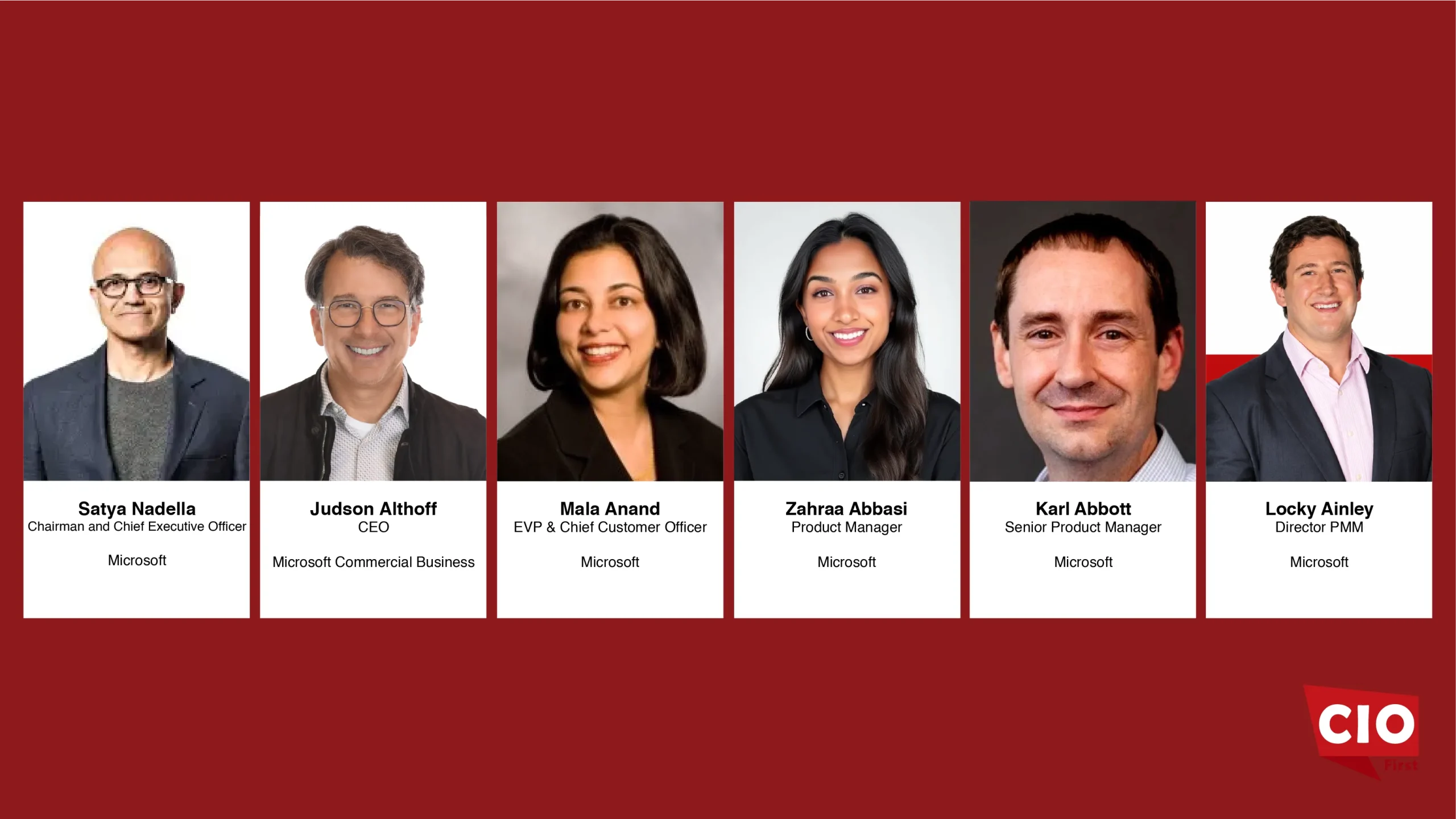
- Satya Nadella – Chairman and Chief Executive Officer, Microsoft
- Judson Althoff – CEO, Microsoft Commercial Business
- Mala Anand – EVP & Chief Customer Officer, Microsoft
- Zahraa Abbasi – Product Manager, Microsoft
- Karl Abbott – Senior Product Manager, Microsoft
- Locky Ainley – Director PMM, Microsoft
Check out the full speaker list here.
The Microsoft Ignite Experience
Ignite is designed to make the transition from idea to implementation feel less theoretical.
The keynote sets the direction. Breakout sessions go deeper. Labs let attendees work directly with the technology. Expert meetups create room for specific questions, while the Hub and Meeting Center provide more opportunities to explore solutions and connect with Microsoft’s technical and business teams.
There is also a useful progression built into the agenda.
Attendees can arrive early for pre-day sessions, certifications and labs on November 16. The main event then moves through the opening keynote, sessions, labs, certifications, Hub programming and networking, before wrapping up on November 20.
That structure matters because enterprise technology decisions rarely happen after one keynote.
They happen after a series of smaller conversations.
A technical team tests the idea. A security team challenges it. Business leaders ask what it will change. Employees need to know how it affects their work.
Ignite is built to accommodate those different questions.
Why Microsoft Ignite 2026 Matters
The AI race has entered its less glamorous phase.
The announcements are still exciting. But the real work has moved into deployment, governance, security, data, skills and adoption.
That is why Microsoft Ignite 2026 matters.
Its program reflects how deeply AI is now woven into the enterprise technology stack. Agents need platforms. Copilots need context. AI workloads need cloud infrastructure. Automation needs security. And all of it needs to create a result that someone inside the business can point to and defend.
The question is no longer whether AI is coming to the enterprise.
It is already there.
The harder question is whether businesses can build the infrastructure, skills and operating discipline needed to make it work at scale.
That is where Microsoft Ignite 2026 gets interesting.
Discover more at https://ignite.microsoft.com/en-US/home