
AWS re:Invent 2026 is arriving at the point where the cloud conversation is becoming much less theoretical. Enterprises are no longer debating whether they should use AI. They are working through harder questions around architecture, inference costs, security, migration, developer productivity and how to move AI from an experiment into something the business can actually run at scale.
Taking place from November 30 to December 4, 2026 in Las Vegas, Nevada, AWS re:Invent brings the cloud and AI community together across The Venetian, Caesars Forum, Caesars Palace, MGM Grand, Encore and Wynn. The five-day event features more than 2,200 sessions, with 70% designed to be interactive, alongside keynotes, workshops, labs, chalk talks, builders’ sessions, an Expo and dedicated networking experiences.
Where Cloud Conversations Get More Strategic
Cloud conferences can easily become product showcases.
re:Invent has never really been limited to that.
The 2026 program is built around the decisions that sit underneath technology adoption. AI strategy, agentic systems, security, migration, architecture, developer productivity, data and infrastructure all appear across the program, while AWS is also curating agendas for specific industries and leadership needs.
That changes the conversation.
A new AI model may be impressive.
The harder question is what happens when thousands of employees, millions of transactions or critical business processes depend on it.
That is where architecture, governance, cost and operational discipline start mattering just as much as the model itself.
re:Invent 2026 is built around that transition.
What to Expect at AWS re:Invent 2026?
Five days of cloud and AI programming
The event begins with Sunday kickoff activities on November 29, followed by full programming from November 30 through December 4. Sessions run across multiple Las Vegas venues, with a mix of keynotes, breakouts, workshops, labs and other formats spread throughout the week.
More than 2,200 sessions
The sheer scale of the agenda is one of the defining features of re:Invent. AWS says the program includes more than 2,200 sessions, with more than 1,200 already live in the catalog across AI, security, migration, developer productivity and other areas.
Hands-on learning instead of passive listening
The event offers workshops and labs where attendees can build alongside AWS experts, chalk talks where architects work through designs in real time, code talks, builders’ sessions, lightning talks, bootcamps and breakout sessions. AWS says 70% of its session formats are interactive and practitioner-led.
A major Expo and technology showcase
The Expo at The Venetian features more than 420 sponsors and booths. It opens with the Monday welcome reception and remains part of the experience throughout the main conference days, giving attendees a chance to explore technologies alongside the session program.
A dedicated security deep-dive
Security runs throughout re:Invent in 2026, but Thursday, December 3 at Wynn is designed as a deeper practitioner-focused day with more than 70 security sessions, all at the 300 to 500 level. The programming covers threat defense, security operations, agentic security and multi-cloud architecture.
Also Read: Gartner IT Symposium/Xpo 2026 Barcelona: Where CIOs Turn AI Ambition into Enterprise Value
Key Themes Driving the 2026 Program
AI moves from experimentation toward production
One of the clearest themes across the 2026 program is the gap between building an AI prototype and running one reliably in production.
AWS is curating an AI agenda specifically around this problem, with sessions covering AI platforms, chips, models and agents. Another curated agenda for business leaders focuses on moving AI from experimentation to enterprise scale through strategy, architecture, governance and organizational transformation.
That distinction matters.
Most businesses do not need another successful proof of concept.
They need to make the existing ones useful.
Agentic AI becomes an infrastructure problem
The rise of AI agents changes the architecture conversation.
Agents can reason, use tools, interact with systems and carry out tasks with less direct human intervention. That creates new questions around identity, authorization, governance, observability and the infrastructure required to keep those systems reliable.
The re:Invent program reflects this shift with dedicated content around agentic AI and a security agenda focused specifically on securing AI and agentic systems through governance, identity and authorization controls.
The interesting part is that agentic AI is no longer sitting neatly inside the AI category.
It is touching everything around it.
Security has moved into the center of AI adoption
The 2026 security program is extensive enough to have its own dedicated day.
Thursday’s deeper sessions cover threat defense, security operations, agentic security and multi-cloud architecture, while the mainstage agenda examines enterprise security architecture, how AWS operates security at scale and how to safely operationalize newly launched capabilities.
That reflects a growing reality.
AI adoption without security architecture is not speed.
It is deferred risk.
Cloud architecture still matters
AI may dominate the headlines, but the infrastructure underneath it still determines what is possible.
re:Invent continues to emphasize compute, storage, networking, architecture, databases, serverless and migration alongside AI. The event also features curated agendas for architects and developers focused on real-world architecture patterns, trade-offs, modern infrastructure and hands-on implementation.
AI did not replace cloud architecture.
It made the consequences of getting it wrong more expensive.
Data becomes central to enterprise AI
The 2026 agenda also places strong emphasis on the data capabilities needed to support AI and agents.
AWS describes data as a foundation for agentic AI, while its wider program connects data, analytics, databases and AI as part of the same enterprise transformation journey.
That is an important shift.
The quality of an AI strategy will increasingly depend on what the organization already knows about its own data.
Developer productivity becomes a business issue
AI is also changing how software gets built.
The re:Invent program includes developer-focused agendas covering live coding, architecture deep-dives and hands-on labs, while the wider session catalog includes developer productivity alongside AI, security and migration.
The objective is not simply writing code faster.
It is shortening the distance between an idea and something that can actually run.
Featured Speakers and Industry Voices
AWS re:Invent 2026 brings together AWS executives, engineers, architects, scientists and industry practitioners. The current featured speaker lineup includes: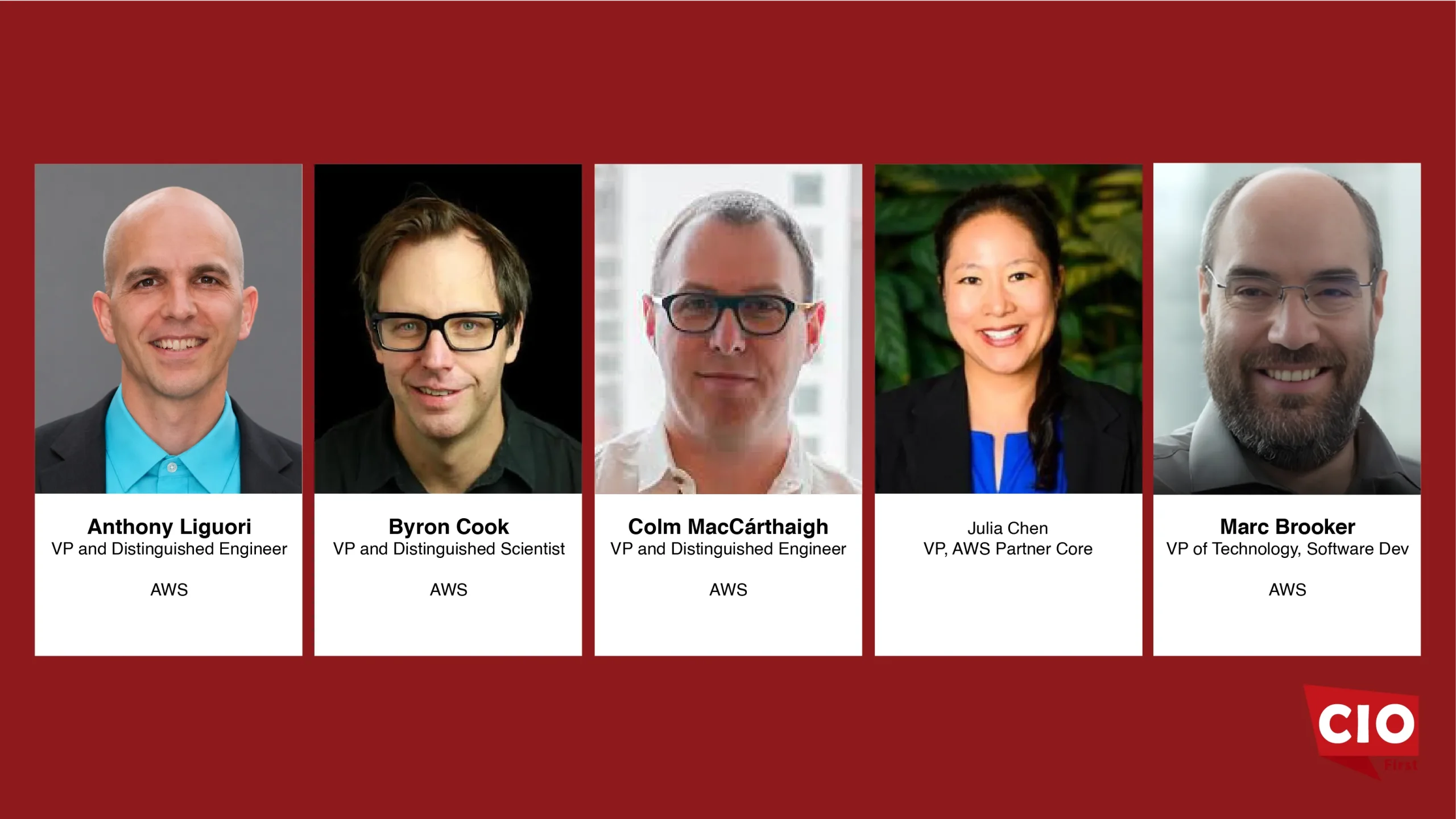
- Anthony Liguori – VP and Distinguished Engineer, AWS
- Byron Cook – VP and Distinguished Scientist, AWS
- Colm MacCárthaigh – VP and Distinguished Engineer, AWS
- Julia Chen – VP, AWS Partner Core
- Marc Brooker – VP of Technology, Software Dev, AWS
Check out the full speaker list here.
The AWS re:Invent Experience
The re:Invent experience is built around a simple idea.
Do not just hear what is new.
Work out what it means for your environment.
For builders, that can mean joining a technical debate, attending a builders’ session, talking directly with AWS engineers or working through architecture problems in a hands-on environment. For business and technology leaders, the event offers customer stories, interactive working sessions, executive meetups, demos and curated learning journeys.
The physical layout reinforces that model.
Sessions are spread across multiple major venues, while the Expo, community spaces, expert stations and networking receptions create places to continue conversations between sessions. AWS also runs industry meetups and smaller expert interactions for attendees who want to get into specific problems rather than stay at the headline level.
And then there is re:Play.
The November 30 to December 4 experience ends with the re:Play party at Las Vegas Festival Grounds on December 3, bringing attendees together after a week dominated by architecture, AI, infrastructure and security.
It is a small reminder that massive technology ecosystems are still built by people talking to people.
Why AWS re:Invent 2026 Matters
Cloud technology has entered a more demanding phase.
The question used to be whether enterprises should move to the cloud.
Now the questions are about what they build on top of it, how much it costs, how securely it runs, how quickly teams can develop, how agents interact with business systems and whether AI investments produce something the organisation can actually defend.
AWS re:Invent 2026 brings those pressures together.
Its strongest proposition is not simply the number of services or sessions on offer. It is the ability to move between strategy and implementation, between architecture and business outcomes, and between what is newly announced and what it actually takes to run in production.
The question is no longer whether cloud and AI will reshape enterprise technology.
They already are.
The harder question is whether organizations can make the infrastructure, security, data and operating decisions required to keep pace.
That is the challenge AWS re:Invent 2026 is bringing to Las Vegas.
Discover more at https://aws.amazon.com/events/reinvent/