How much of the cloud expenditure contributes to your growth and how much falls into a black hole?
Conventional data centers meant relatively static costs for companies. The shift to cloud computing introduced the element of flexibility to infrastructure provisioning, which in turn became scalable and accessible.
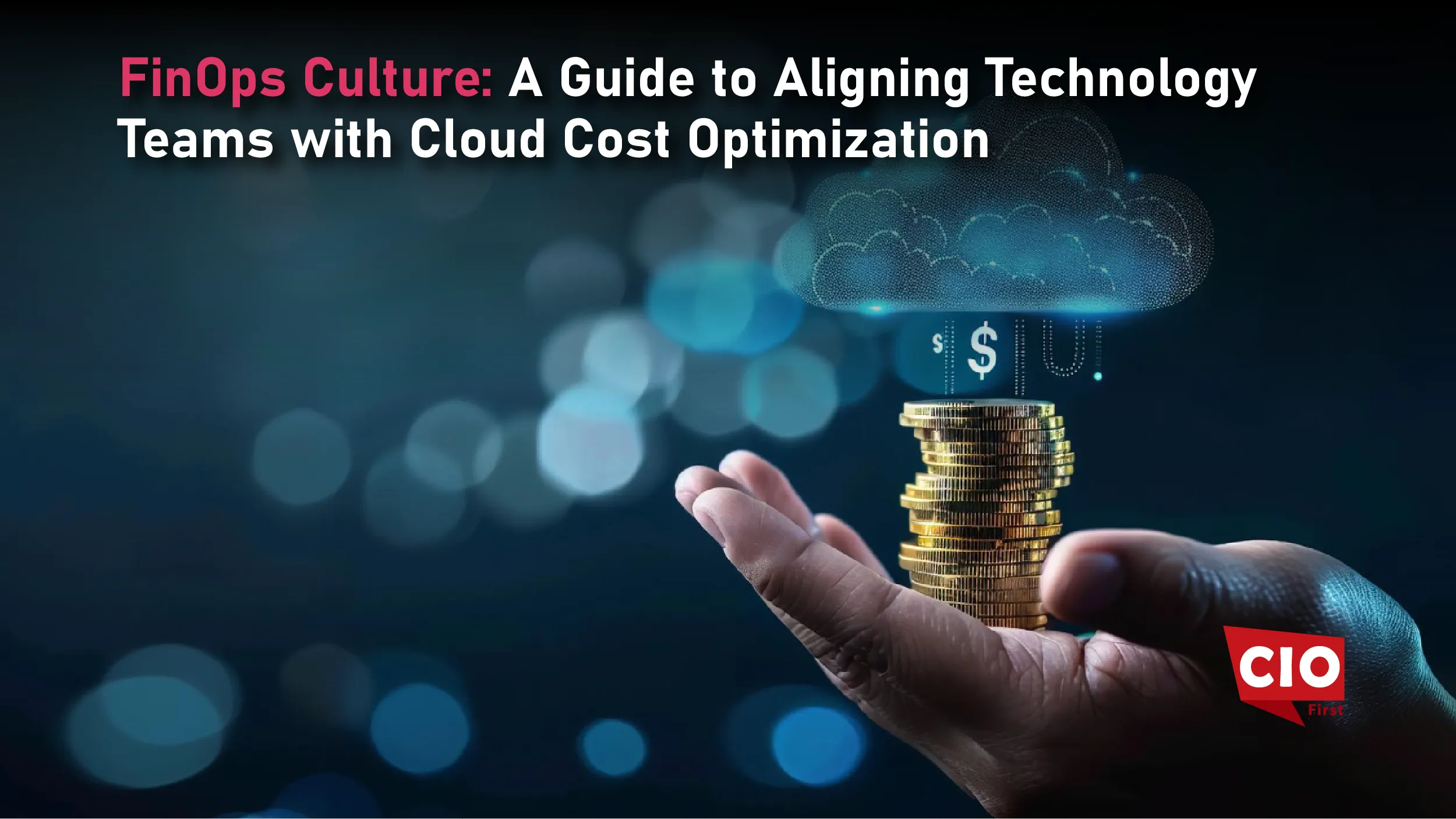
Flexibility in this case means difficulty in controlling spending on such a basis as there is no accountability when people provision resources. FinOps culture is a concept that means collaboration of the finance team, IT team, and engineers to optimize cloud spending while extracting maximum business value. The current article talks about how to build FinOps culture in enterprises.
What Exactly Is a FinOps Culture?
A FinOps culture is a way of managing cloud spending in which engineering, finance, and business teams share responsibility for the value they get from technology. The goal extends beyond cutting costs. Teams must know what, where and how to invest, what and how to optimize, and what and how to help grow all within the bounds of performance and reliability.
Here is where the Iron Triangle of cost, speed and quality comes in play. A less costly cloud deployment is a less speedy one, and a quicker one may require more compute. FinOps allows teams to do these trade-offs based on business requirements, not just optimizing a metric in vacuum.
FinOps Foundation names it as Kuleana, it’s the word from Hawaiian language meaning responsibility. Within the scope of Cloud financial management, people become responsible for the resources they use and the cost of the decisions made. Engineers think about the cost while designing and building the applications, and Finance leaders provide the information necessary for making the correct decisions.
“Fin Ops isn’t a technology, it’s a culture”, as Fin Ops Foundation describes it. Software can find the inefficiencies and detect the anomalies in cost but without a responsible person who communicates consistently and acts, there will be false positives and noise. Sustainable Fin Ops culture relies on the cost data and behavior.
Also Read: Key DevOps Metrics: How Large Enterprises Measure DevOps Success and Business Impact
The Three Pillars of Cloud Financial Accountability
A strong FinOps culture rests on three connected practices: visibility, collaboration, and ownership. If anyone is missing, cloud cost optimization becomes harder to sustain.
1. Visibility: Make Cloud Spending Understandable
Teams cannot optimize spending they cannot trace. Visibility into cloud costs begins with tagging and labeling. Standardizing this process enables teams to attribute costs to individual apps, projects, departments, or lines of business, which reveals how much individual workloads use, where teams have left resources sitting idling, and whether others are performing more work than anticipated. Well-managed cloud costs communicate budget information to all people in the organization.
2. Collaboration: Bring Builders and Buyers Together
Engineers understand how their apps run, Finance understands budgets, forecasts and business drivers. Separate them out into different groups and the engineers will optimize for performance and Finance will ask why it costs so much. But given regular discussions, shared dashboards and KPIs to measure performance between teams, both will be able to talk tradeoffs through together. Cloud cost optimization can be part of the planning/delivery process rather than something that waits for the bill.
3. Ownership: Put Accountability Close to Decisions
While central Fin Ops teams set policies and guide, developers also influence cloud use. By offering developers insight into the costs of their work, organizations enable teams to optimize resource consumption while developing, launching, and scaling new services. This shared responsibility motivates teams to right size what they use, identify and eliminate idle resources, and drill down into unexpected costs before they escalate.
Google Cloud customers improved adoption of cost-reporting through current Fin Ops tools globally and 75% of those who used the company’s recent Gemini Cloud Assist for Fin Ops, a rise in cost-reporting adoption. This increase showcases how providing access to and providing the means to act on cost data is beneficial although not enough to reduce costs alone. A mature Fin Ops culture links visibility to collaboration then transforms both into clean ownership.
Bridging the Gap by Aligning Engineering, Finance, and IT
A Fin Ops culture sticks when every team recognizes how cloud costs relate to its goals. And that depends on providing varied incentives for engineering, finance, and IT leadership with a common understanding of business value.
Engineering: Turn Efficiency into Product Investment
If cloud cost optimization is driven solely by finance, engineers are likely to rebel. Instead, align engineering goals with your cloud expenses. Help teams right-size workloads, turn off idle servers, and optimize architecture to create capacity and dollars for developing the next feature. Tell teams when they have saved them.
Finance: Transition from Gatekeeping to Enabling
For finance organizations, budgeting is about having control and visibility over expenses, predictable budgets, and accountability. Instead of looking at budgets as a boundary, budgets should be seen as limitations not boundaries. Finance departments should collaborate with engineers to feed in consumption and demand forecasts since cloud computing is based on consumption. For example, detailed demand forecasts, such as cost per transaction or active user.
IT Leadership: Connect Spend to Business Outcomes
It is necessary for executives to have an idea about the value generated by their cloud investments. This is done through an understanding of the cost incurred in terms of the operations of the infrastructure as opposed to other measurements such as margins, customers and revenue.
This AWS case study shows how useful it can be. A North American financial company that manages 1,500 AWS accounts independently gained about US$1.4 million per year through two FinOps Experience-Based Acceleration workshops. According to AWS, this was due to optimization and training practices, and good governance.
A Phased Approach to Building FinOps Maturity
Building a FinOps culture takes time. Maturity model by FinOps Foundation provides an enterprise with a structured approach for moving up from awareness to cost optimization, which is achieved through ongoing optimization through data. The crucial thing is to align the stages with the company’s current capabilities and not vice versa.
Crawl: Establish Visibility
Begin by adopting common cloud resource tagging, cost dashboards, and a common language and understanding across engineering, finance, and IT. Teams can answer questions like who owns this workload, what it costs, and why it is important. These simple steps will serve as the foundation for future efforts.
Walk: Build Accountability into Workflows
Once visibility improves, introduce show back to communicate costs to teams and chargeback where departments need to bear those costs directly. Automate straightforward policies, such as identifying idle resources and recommending rightsizing. Regular cost reviews help teams turn reports into corrective action.
Run: Make Cost Part of Architecture
Teams monitor unit economics at higher maturity levels, strive to optimize workloads iteratively, and assess cost as a factor in design along with performance and reliability. Engineers actively think about the long-term cost implications of an architecture.
AWS announced that a mere 17.7% of applicable customers had turned on EC2 memory metrics. Customers who did turn on these metrics saw savings per recommendation between 8 and 30 percentage points higher, AWS found. This is an example of how more granular usage data may lead to better optimization choices, although outcomes depend on workload, and Fin Ops maturity is enhanced when this type of data becomes routine.
Shifting the Mindset from Saving Money to Maximizing Business Value
The true success metric of a FinOps culture is the business value derived from cloud spend. Over-the-top cost cuts will deteriorate performance and hamper innovation. Improved unit economics are based on flows of spend versus flows of value, for example cost per order, cost per new customer, and cost per node in a cluster. When AI work increases, teams can add provider, token type, product, agent, and owner tags to billing data to better understand where to attribute AI costs, perfect showback/chargeback, and optimize AI service economics to guide investments.
Conclusion and Next Steps
Permanent culture arises out of continuous peer visibility, responsibility, and cost insight. Over time, organizations will need to iterate on the practice of cost measurement, profitability trade-offs, and infrastructure value ties as cloud grows and changes. Or, put another way, They’ll have to bring financial and cloud focus to their every-day technical planning and designing, not when the cash runs out.
Assess your FinOps maturity. Audit your cloud resource tags and find the ownership of each workload, and unite engineering, finance, and IT to define your next action. For measurable and incremental wins, your best path to ongoing management is through the cloud.